Focus on preventing police violence in the first place

Mandating body-worn cameras for Madison's police may be one tool in the toolbox for increased accountability but focusing on it as a panacea is another example of misdirected energy.
Vol. 92
IN THIS ISSUE: ESSAY | NOW READ THIS | LISTEN UP | SPORTS | FINAL FRAME
“At times in the past month, I have genuinely wondered what disturbs people more: that a man is dead, or that we don't have more video of his killing.”
I was deeply struck by this line that opens the first issue of friend and former Tone editor Scott Gordon’s newsletter, The Yahara Flyer. It seems at first like an almost too-harsh assessment of Madison’s long debate over whether or not its police force should have body cameras. But given a little time to think about it, I don’t think it’s entirely unfair.
We have a clear problem: Police killing people, disproportionately people of color and/or those in mental health crisis. And doing it with almost complete impunity. The numbers are only going up.
I’m not about to debate anyone who thinks that police should continue to have free reign to kill people with impunity (or at all). If you think police should act as judge, jury, and executioner, we can’t be friends.
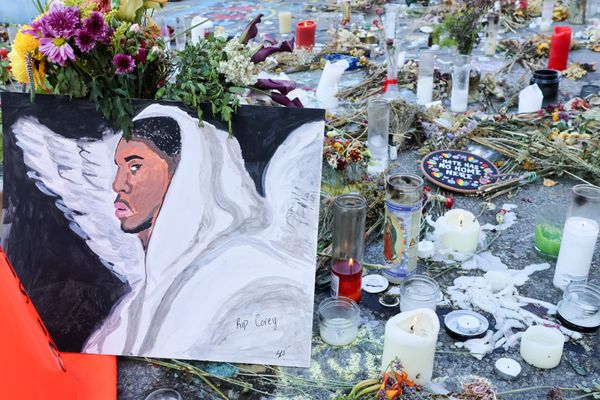
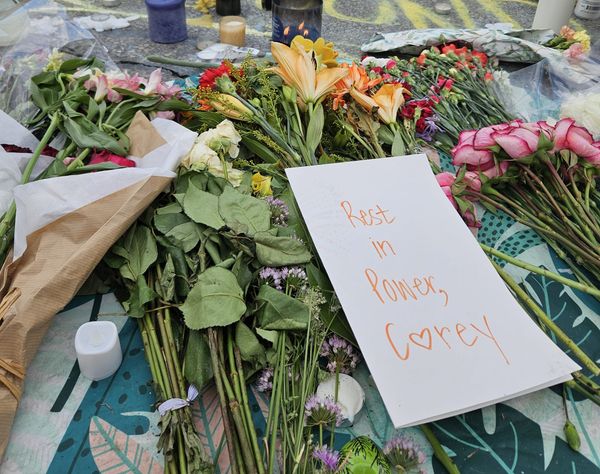
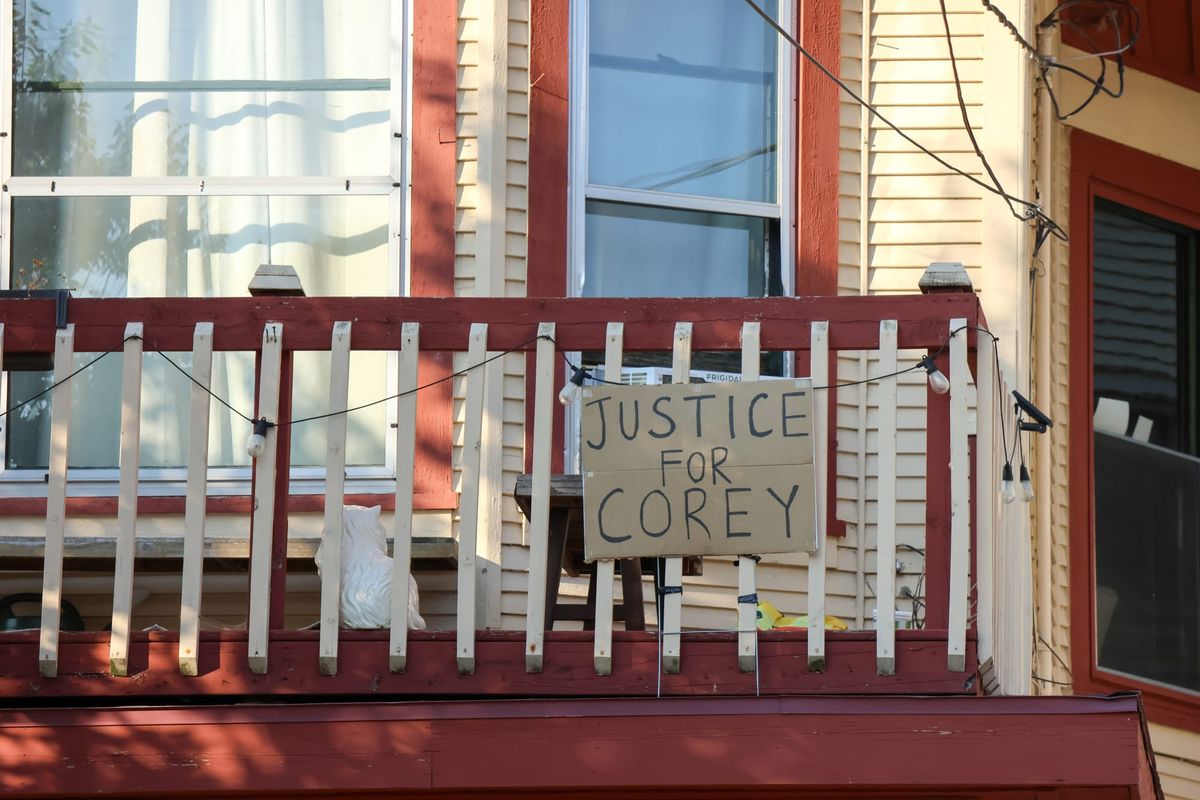
I do think it makes sense to engage in robust debate when it comes to solutions to the problem. However, particularly in the wake of the police killing of Corey Ruiz in Madison this summer, I’ve been increasingly frustrated by seeing the justified outpouring of community grief and anger co-opted by those who would have us believe that simply giving police body-worn cameras is the panacea that deserves the most (if not all) effort and energy.
Mayor Satya Rhodes-Conway recently announced that the city’s plan to roll out body cameras in a phased approach over three years has been drastically accelerated thanks to a $350,000 grant from the Madison Community Foundation.
That may feel like a kind of victory for some, an actionable step in the wake of tragedy. Maybe it is. But I can’t shake the feeling that this may end up being a case of “be careful what you wish for.” There are still so many unanswered questions.
First, let’s talk about the grant itself: “The one-year grant will fund the hiring of two IT specialists and one forensic analyst and cover most of the program’s software costs, which Rhodes-Conway put at about $100,000 a year. The police department will absorb the remaining operating costs, which the mayor estimated at between $30,000 and $40,000, within its existing budget. The city plans to apply for a U.S. Department of Justice grant, which requires a 50-50 match, to help pay for the 220 cameras the program will need.”
Where does funding for the IT specialist positions come from after the grant period is over (our perpetually cash-strapped city, one assumes)? Will those IT specialists work for the police department or for the city (i.e. who will they report and be accountable to, presuming they’re the ones who will be responsible for compiling and releasing the thousands of hours of footage)? Who controls access to the footage? Will the public, the press, etc. have to pay fees to access footage? How big will those fees be? Will we be able to access it in a timely fashion or will the police have the right to gatekeep and/or edit it as they see fit? How will AI be used to analyze footage and to what ends? What safeguards will be in place for its use, particularly as regards personal privacy and profiling? Do we really want more surveillance in our lives?
I have yet to see any meaningful engagement with those questions.
Beyond that, even when footage is made available, what’s being done to ensure that police officers and/or departments will actually be held accountable for their actions? We’re still up against qualified immunity, the iron wall of police “unions,” and a whole legal system that makes it virtually impossible to prove police wrongdoing or enforce meaningful sanctions against them for it. Not only that, if we’re only allowed to seek justice in cases where officers don’t follow protocol, what if the protocol itself is flawed?
Would a body camera have prevented the killing of Corey Ruiz? Or simply provided yet another gut-wrenching angle of what we can already clearly see via the numerous cell phone videos taken that day?
We have so much footage - of police murders, of violence writ large, even a full-scale genocide - and still the people with power to address the root causes do nothing but protect that power. I am beginning to believe that more footage does not equate to more accountability or change. That’s another essay for another day and I’m sure brighter minds than I have already dug deep into the human condition and response to how much more exposed we are to images of violence these days.
The argument in favor of police body cameras seems to be that they will push officers to act more honorably in the first place and act as a tool for greater accountability when they don’t. But plenty of research has already shown the cracks in this optimistic logic.
A systematic review of research into the effects of body-worn cameras from 2020 showed that they “do not have clear or consistent effects on most officer or citizen behaviors, but different practices need further evaluation.”
More often, police like cameras because they think they help increase trust with the community while simultaneously helping them disprove allegations of misconduct. Nothing about preventing police abuse of power, racial profiling, or overall use-of-force.
But let’s also set aside all the questions and concerns about the implementation of body cameras and zoom out a bit. Why has this seemingly become the main talking point in the city’s discussions of how to deal with the fallout from Ruiz’s killing?
It’s especially notable when you contrast that overwhelming focus with the concerted campaign to undercut and even demonize Aeiramique Glass and the Office of the Independent Police Monitor. Notably, the OPM is one of the only mechanisms we have right now to provide any meaningful, independent oversight and accountability for the police, but it’s been underfunded and undermined at almost every turn. An officer even sought and won a restraining order against Glass for a minor incident that, based on video, seems more like police harassing the clearly identified monitor than vice versa.
Further, because Madison loves a good report that then gets shelved, there are literally hundreds of outstanding recommendations for reforms/changes to MPD from a previous committee’s efforts. The Madison Police Department Policy & Procedure Review Ad Hoc Committee released its findings in 2019. The most recent comprehensive update about if and how any of those recommendations have been implemented is from 2020. Even there, some recommendations listed as “adopted” were only minimally so, i.e. in a recommendation on foot pursuits that had four subparts, only one of the four was actually adopted.
I’ve been told by a person who regularly and professionally engages with these reports that what MPD asserts as the “status” of any recommendation should “not be taken at face value,” and that MPD “consistently overclaims reforms or policies/training consistent with Ad Hoc Committee recommendations. A lot of the claims are not accurate/truthful.”
And while one of the charges of the OPM is to track which recommendations have or haven’t been implemented, getting that information from MPD often proves difficult (see above). Most importantly, perhaps, one of the key recommendations that hasn’t been adopted regards the department’s use-of-force policy (I’ll include the full text of this, Recommendation 109, in a post script). This recommendation would substantially change the grounds on which officers could be charged or held even remotely accountable for killing or injuring a person. It might also help prevent those incidents in the first place, which should be our main and overriding focus.
(To be transparent, I believe in abolition. Again, an essay for another day - or go read anything by Mariame Kabe, Alec Karakatsanis, etc. But while we work towards abolition, I do think it’s crucial to do everything in our power to mitigate harm and return power to the people)
So, sure, I’m open to the idea that body-worn cameras could be a tool in the “mitigate harm” toolbox. I see enough people who’ve been directly harmed by police action advocating for their use that I can’t, in good conscience, stand entirely against them. But we should be asking questions about how they’ll be used, who gets to access footage and how/when, and so on. My main point is simply that I don’t want us to allow the larger debate about police accountability and the prevention of violence to be entirely co-opted by a single-solution crusade. Especially any single-solution being touted by the people with the most power in the first place.
(And hey, Madison? Maybe consider doing something with the many fine reports we’ve generated over the years that provide actionable reforms and changes to our ongoing problems. Also, truly listen to the people and communities most directly impacted by them. I dunno, just a thought.)
###
Recommendation 109:
MPD should incorporate the following precautionary principles into its Use of Force SOPs and MPD officers should be trained accordingly:
- Necessity: Deadly force should only be used as a last resort. The necessity to use deadly force arises when all other available means of preventing immediate and grave danger to officers or other persons have failed or would be likely to fail.
- Proportionality: When force is needed, the force used shall be in proportion to the threat posed. Department members will use only the force that is proportional to the threat, actions, and level of resistance offered by a subject. Proportionality involves officers: (1) using only the level of force necessary to mitigate the threat and safely achieve lawful objectives; (2) considering, if appropriate, alternate force options that are less likely to result in injury but will allow officers to achieve lawful objectives; and (3) considering the appropriateness of officers’ actions. Proportional force does not require officers to use the same type or amount of force as the subject. The concept of proportionality does not mean that officers, at the moment they have determined that a particular use of force is necessary and appropriate to mitigate a threat, should stop and consider how their actions will be viewed by others. Rather, officers should begin considering what might be appropriate and proportional as they approach an incident, and they should keep this consideration in their minds as they are assessing the situation and deciding how to respond. Proportionality also considers the nature and severity of the underlying events.
- Reassessment: Officers shall reassess the situation after each discharge of their firearm.
- Totality of officer conduct: The reasonableness of an officer’s use of force includes consideration of the officer’s tactical conduct and decisions leading up to the use of force. Police officers shall ensure their actions do not precipitate the use of deadly force by placing themselves or others in jeopardy by taking unnecessary, overly aggressive, or improper actions. It is often a tactically superior police procedure to withdraw, take cover, or reposition, rather than the immediate use of force.
- Immediate threat: Deadly force is only authorized if the threat is immediate. A threshold of “immediate threat” reflects language in United States Supreme Court decisions. The latest model use of force policy published by the International Association of Chiefs of Police eliminates the term “imminent.”
###
Now Read This.
“Madison, you accidentally measured how close you are to winning community control of police and no one is talking about it” [Rachel Rovinsky]
You should know about this progress. You should be able to tell your community how you won this concession, and how you can keep winning until community control of police becomes reality.
“Trump begs SCOTUS to let him unleash midterm chaos” [Liz Dye for Public Notice]
We’re on the precipice of complete chaos as Trump tries to seize control of the midterms. Multiple courts have ruled that this is wholly illegal. And yet, no one knows whether the Supreme Court’s MAGA majority will once again leap in to ensure the president is able to violate the law. The result is a frenzied race by lower courts to render their own rulings as quickly as possible to mitigate the impact of the bomb that SCOTUS may or may not drop in the middle of the November election. This is not how functioning democracies go. Or at least, not for long.
“Notes on Camp: Teenage Sex and Death At Camp Miasma” [Jude Ellison Doyle]
The ultimate Liberation is trusting even one other person enough to tell them what’s actually going on with you, and even the most outwardly Liberated queer people sometimes cannot do it. How could we? What does every queer person learn as the first and most important truth about our sexuality? If I let other people know who I am, they will kill me. If I tell you what I want, I am going to die.
“Denouncing Extremists” [Kevin Kruse]
While the media has done excellent work chronicling all of Musk's donations and directions, they haven't remotely made this as big of an issue as it should be. They've spent recent weeks demanding that Democrats denounce the Twitch streamer Hasan Piker – even when those Democrats had no relationship with him at all! – but barely a question to Republicans who are receiving massive amounts of money and even more free publicity from their top donor Elon Musk.
“‘The Rats Come at Night: What Goes On Unseen in Gaza’s Displacement Camps” [Hassan Herzallah]
Ever since our roof became a sheet of fabric, after the Israeli Occupation forced us to leave our home in Rafah, everything has changed. The war is no longer only the sound of bombing and the planes. Other battles have emerged, ones we had never seen before: wars against what crawls beneath the ground. Rats, insects, and things whose names we do not even know, but somehow know how to reach us.
Listen Up!
Friend and LINE bandmate Austin, under the name Autumn Lovejoy, has just released their first solo album, “Tired Eyes,” and you should go give it a listen on Bandcamp. Not just because I’m a guest on two tracks (one with LINE and one with my band, Damsel Trash), but also because of that. It’s a perfect record for autumn coziness and/or if you’re interested in musical meditations on life, love, and grief.

Sports!
‘Tis the season for me and my friends to strap on roller skates and collide with one another on the flat track for your enjoyment. Madison Roller Derby kicks off our 22nd season with a double-header on Saturday, October 24 at the Arena at Alliant Energy Center in Madison. You can get all the details and buy tickets here (or season passes!). Really, what better way to spend a Saturday evening in fall/winter than by supporting an all-volunteer, grassroots/DIY, very queer/trans inclusive sport?!

Final Frame.

I’ve been traveling the state a lot in past weeks for work, and it’s given me the chance to witness the beauty of Wisconsin’s transition from late summer to fall. While I was out and about, a colleague recommended that I stop by the small but beautiful Schluckebier Sand Prairie preserve in Sauk County. The Prairie Enthusiasts describe it as “one of the last surviving remnants of the 14,000 acre Sauk Prairie, a vast grassland that covered the area prior to European settlement.”
When I was there, a variety of asters, goldenrod, and other late season native plants and flowers were blooming. That meant the bees, a little extra frenzied with the sense of impending winter, were plentiful. I caught this gal working hard on some asters.
‘Til next time.
Take care of yourself and of each other. Free Palestine. Abolish ICE.
This newsletter is an AI-free, venture capital-free, bespoke labor of love. If you like my writing, please consider supporting my work with a paid Grist From the Mills subscription - or just send me a tip in the amount of your choice and/or share this newsletter with a friend.
NOTE: The opinions expressed in this newsletter are solely my own and do not necessarily reflect those of my employer.